

Sleep Hygiene: 15 Simple Habits for Better Sleep and Less Anxiety
Good sleep starts long before you get into bed.
Your daytime habits, evening routine, bedroom environment, and stress levels can all affect your sleep.
This collection of habits is known as sleep hygiene.
Good sleep hygiene does not mean following a perfect bedtime routine. Instead, it means creating habits that support a regular sleep-wake rhythm.
For Sleep Ease Guide readers, this guide explains practical ways to improve sleep hygiene without making bedtime complicated.
You will also learn how relaxation exercises, daily routines, and calming herbal traditions such as chamomile, valerian root, lavender, and passionflower fit into a healthy sleep strategy.
What Is Sleep Hygiene?
Sleep hygiene refers to habits and environmental choices that support healthy sleep.
These habits include keeping a consistent sleep schedule, creating a comfortable bedroom, limiting stimulating activities before bed, and managing stress.
The National Heart, Lung, and Blood Institute recommends consistent sleep and wake times, a quiet and dark bedroom, daytime activity, and a relaxing period before bedtime.
Good sleep hygiene can also make your evening feel more predictable.
That matters because bedtime should signal your body that the day is ending.
Why Does Sleep Hygiene Matter?
Your body follows a natural sleep-wake rhythm.
Changing your bedtime dramatically from one night to another can make that rhythm harder to maintain.
Stress can also interfere with sleep. Worrying about sleep itself can sometimes increase frustration at bedtime.
A consistent sleep hygiene routine gives you a simple framework for handling these challenges.
15 Sleep Hygiene Habits to Try
You do not need to adopt all 15 habits immediately.
Start with two or three changes that feel realistic.
| Sleep hygiene habit | Why it can help |
|---|---|
| Keep a consistent wake time | Supports a regular body clock |
| Keep your bedroom cool | Creates a comfortable sleep environment |
| Reduce evening light | Helps signal that bedtime is approaching |
| Limit late caffeine | Reduces stimulation near bedtime |
| Exercise during the day | Supports overall sleep health |
| Get outdoor light | Supports your daily rhythm |
| Avoid heavy late meals | Reduces discomfort at bedtime |
| Create quiet time | Helps your mind transition toward sleep |
| Limit long naps | Protects nighttime sleepiness |
| Prepare for tomorrow | Reduces bedtime worry |
| Practice relaxation | Helps reduce physical tension |
| Keep your bedroom dark | Limits unwanted nighttime stimulation |
| Reduce nighttime screen use | Creates fewer stimulating activities |
| Follow a calming routine | Builds predictable bedtime cues |
| Give yourself enough sleep time | Protects your sleep opportunity |
1. Keep a Consistent Sleep Schedule
One of the most useful sleep hygiene habits involves consistency.
Try to go to bed and wake up at similar times each day.
Your schedule does not need to remain perfect.
However, large changes between weekdays and weekends can disrupt your sleep-wake rhythm. NHLBI suggests keeping weekend differences to about one hour when possible.
Choose a wake-up time that fits your daily responsibilities.
Then build your bedtime around the amount of sleep you need.
2. Get Natural Light During the Day
Spend time outdoors during the day when possible.
Morning and daytime light can provide important signals for your body clock.
Pair outdoor light with regular daytime activity.
This simple combination can become an important part of your sleep hygiene routine.
3. Create a Sleep-Friendly Bedroom
Your bedroom should encourage rest rather than alertness.
Aim for a space that feels:
- Cool
- Quiet
- Dark
- Comfortable
- Relaxing
NHLBI specifically recommends a cool, quiet, and dark bedroom for better sleep habits.
Small environmental changes can make a noticeable difference.
Consider blackout curtains if outside light bothers you.
Use comfortable bedding and reduce unnecessary noise.
4. Create a One-Hour Wind-Down Period
Do not make bedtime the first moment when you stop working.
Instead, create a gradual transition.
During the final hour, choose quieter activities.
You could read, stretch gently, take a warm bath, listen to calming music, or practice breathing exercises.
NHLBI recommends using the hour before bed for quiet time and avoiding bright artificial light.
This routine can become one of the strongest anchors in your sleep hygiene plan.
A sleep-focused sound machine or gentle bedtime routine can also help create a consistent environment for winding down. Explore Hatch’s sleep and relaxation products.
5. Reduce Caffeine Later in the Day
Caffeine can remain active in the body for several hours.
Coffee, tea, energy drinks, chocolate, and some other products contain caffeine.
If you struggle with sleep, consider reducing caffeine later in the day.
NHLBI notes that caffeine’s effects can last up to eight hours.
Your sensitivity may differ from someone else’s.
Pay attention to how your caffeine timing affects your sleep.
6. Stay Physically Active During the Day
Regular physical activity supports overall health and can fit naturally into good sleep hygiene.
Try to stay active during the daytime.
If vigorous exercise makes you feel alert, avoid scheduling it immediately before bedtime.
NHLBI recommends regular daytime activity and suggests exercising several hours before bed.
7. Avoid Heavy Meals Close to Bedtime
A large meal shortly before bed can feel uncomfortable.
Try to finish heavy meals several hours before sleeping.
If you need something later, choose a light option that feels comfortable.
Your goal is to make bedtime physically easy rather than adding another source of discomfort.
8. Limit Long or Late Naps
A nap can temporarily improve alertness.
However, long or late naps may reduce your sleepiness at night.
If you have trouble falling asleep, consider keeping naps shorter and earlier.
NHLBI suggests limiting adult naps to about 20 minutes when nighttime sleep becomes difficult.
9. Create a Simple Bedtime Routine
A predictable routine can make bedtime feel less demanding.
Try this example:
| Time before bed | Routine |
|---|---|
| 60 minutes | Finish demanding activities |
| 45 minutes | Dim lights and prepare tomorrow’s essentials |
| 30 minutes | Read or listen to calming audio |
| 20 minutes | Gentle stretching |
| 10 minutes | Practice slow breathing |
| Bedtime | Enter a quiet, comfortable bedroom |
You can adjust these times to fit your lifestyle.
The consistency matters more than the exact schedule.
Relaxation Exercises for Better Sleep Hygiene
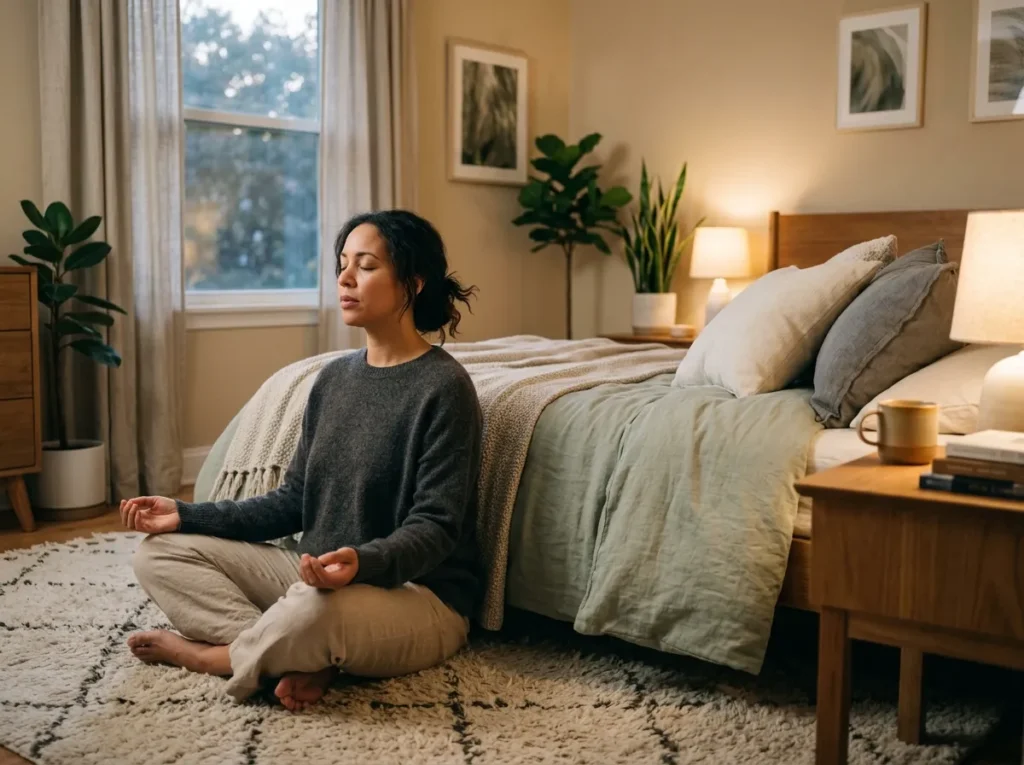
Stress often follows people into the bedroom.
You cannot always remove stressful thoughts.
However, you can change how you respond to them.
Relaxation techniques may support a broader strategy for improving sleep habits. NCCIH notes that techniques such as progressive relaxation and deep breathing may help some people.
Slow Breathing Exercise
Try this simple exercise before bed.
- Sit or lie comfortably.
- Relax your shoulders.
- Breathe slowly without forcing the breath.
- Pay attention to the movement of your abdomen.
- Continue for several minutes.
- Return your attention to your breathing when your mind wanders.
You do not need to achieve a completely empty mind.
The goal is to shift your attention away from stressful thoughts.
Progressive Muscle Relaxation
Progressive muscle relaxation focuses your attention on physical tension.
Start with your feet.
Gently tense the muscles for a few seconds.
Then release the tension.
Move gradually toward your legs, abdomen, hands, shoulders, and face.
Keep every movement comfortable.
This exercise can become part of your evening sleep hygiene routine.
The Evening Worry List
Some people struggle with bedtime because they keep thinking about tomorrow.
Try writing down your concerns before entering the bedroom.
| Worry | Tomorrow’s action |
|---|---|
| Important appointment | Add it to your calendar |
| Unfinished task | Schedule time for it |
| Morning preparation | Prepare essentials tonight |
| General concern | Write one practical next step |
This does not solve every worry.
It simply gives your mind somewhere to place unfinished thoughts.
Chamomile, Valerian Root, Lavender, and Passionflower
Herbal products often appear in conversations about sleep hygiene.
Chamomile, valerian root, lavender, and passionflower have all received attention for relaxation or sleep.
However, natural does not automatically mean effective or risk-free.
Chamomile
People commonly drink chamomile tea as part of a relaxing evening ritual.
However, NCCIH reports that evidence remains insufficient to establish chamomile as an effective treatment for insomnia.
Chamomile may also cause allergic reactions in people sensitive to related plants.
Valerian Root
Valerian root has a long history of traditional use for sleep.
Research on valerian and sleep remains inconsistent.
NCCIH states that there is not enough evidence to determine whether valerian provides reliable health benefits.
Do not assume that a valerian supplement will improve your sleep.
Lavender
Lavender is often used as an aroma during relaxation routines.
Some research suggests lavender preparations may help anxiety, although researchers note limitations in the evidence.
A gentle scent can become part of a calming bedtime environment if you tolerate it well.
Passionflower
Passionflower has traditional use as a calming herb.
Small studies suggest that oral passionflower may improve total sleep time in adults with insomnia, but findings remain mixed.
Passionflower can also cause drowsiness or dizziness and may interact with some medications.
Before using concentrated herbal products, talk with a healthcare professional.
A Daily Routine for Better Sleep Hygiene

Your nighttime habits matter, but daytime habits matter too.
Try this simple schedule.
| Part of day | Sleep-friendly habit |
|---|---|
| Morning | Wake at a consistent time |
| Morning | Get outdoor light |
| Morning | Eat breakfast if it suits your routine |
| Daytime | Stay physically active |
| Afternoon | Monitor caffeine intake |
| Evening | Finish heavy meals earlier |
| 1 hour before bed | Begin quiet time |
| 30 minutes before bed | Relax without demanding tasks |
| Bedtime | Follow your consistent schedule |
You do not need to follow this schedule perfectly.
Use it as a framework.
A 7-Day Sleep Hygiene Reset
Changing everything overnight can feel overwhelming.
Instead, use a gradual seven-day approach.
Days 1–2: Fix Your Wake Time
Choose one wake-up time and follow it consistently.
Days 3–4: Improve Your Bedroom
Reduce unnecessary light and noise.
Make your bedroom comfortable and relaxing.
Day 5: Add a Wind-Down Routine
Set aside 30 to 60 minutes for quiet activities.
Day 6: Add Relaxation
Practice slow breathing or progressive muscle relaxation.
Day 7: Review Your Progress
Ask yourself:
- Do I fall asleep more easily?
- Do I wake less often?
- Do I feel more rested?
- Which habit feels easiest to maintain?
- Which habit needs adjustment?
Keep the habits that work well for you.
What If Sleep Hygiene Does Not Solve the Problem?
Good sleep hygiene can support healthy sleep.
However, it cannot solve every sleep problem.
Persistent difficulty falling asleep, staying asleep, or functioning during the day may require professional evaluation.
Insomnia can involve difficulty falling asleep, staying asleep, or getting restorative sleep despite having enough opportunity to sleep.
If sleep problems continue or significantly affect your daily life, talk with a healthcare professional.
Also seek professional advice if you experience symptoms such as loud snoring, breathing interruptions during sleep, or significant daytime sleepiness.
Sleep Ease Guide Internal-Link Suggestions
Add relevant internal links throughout the article rather than placing every link together.
Suggested links
The 10 Sleep Hygiene Tips
https://www.sleepeaseguide.com/sleep-hygiene/the-10-sleep-hygiene-tips/
Use this link when discussing the fundamentals of sleep hygiene.
The Impact of Stress on Sleep
https://www.sleepeaseguide.com/lifestyle-health/the-impact-of-stress-on-sleep/
Use this link in the sections about anxiety, stress, and nighttime worries.
Sleep Apnea
https://www.sleepeaseguide.com/sleep-disorders/sleep-apnea/
Use this link when discussing snoring, breathing interruptions, or persistent daytime sleepiness.
Natural Remedies for Sleep
Link to your existing Sleep Ease Guide article in the natural-remedies category when discussing chamomile, valerian root, lavender, and passionflower.
Frequently Asked Questions
What is sleep hygiene?
Sleep hygiene means the habits and environmental choices that support healthy and consistent sleep. It includes regular sleep times, a comfortable bedroom, daytime activity, and a calming bedtime routine.
What are the most important sleep hygiene habits?
Start with a consistent wake time, enough sleep opportunity, daytime activity, natural light, a comfortable bedroom, and a relaxing wind-down period.
Can sleep hygiene reduce nighttime anxiety?
Good sleep hygiene can create a calmer and more predictable bedtime environment. Breathing exercises, progressive relaxation, and a written worry list may also help manage bedtime stress.
Conclusion
Good sleep hygiene does not require a complicated routine.
Small habits can create a calmer transition from daytime activity to nighttime rest.
Start with a consistent wake time.
Then improve your bedroom, reduce late-day stimulation, create quiet time, and practice a simple relaxation exercise.
Chamomile, valerian root, lavender, and passionflower may interest people exploring traditional relaxation approaches. However, evidence varies, and supplements can have side effects or interactions.
Use sleep hygiene as a foundation rather than searching for one perfect sleep solution.
With patience and consistency, your evening routine can become simpler, calmer, and easier to maintain.