What Is Sleep Apnea? Signs, Risks, and Modern Solutions
What Is Sleep Apnea? Signs, Risks, and Modern Solutions
What Is Sleep Apnea?
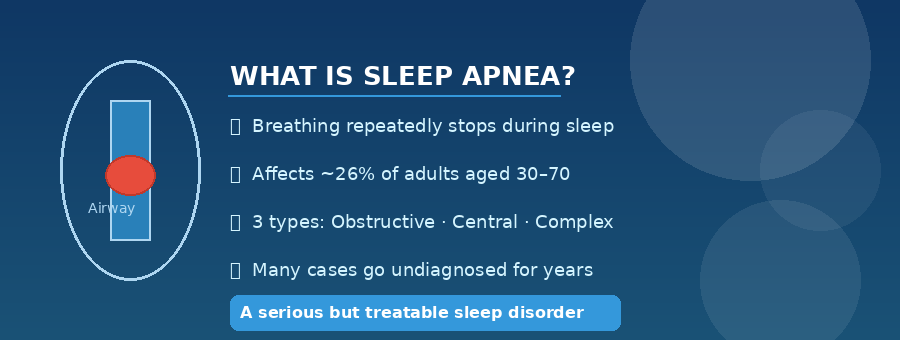
Sleep apnea is a common but serious sleep disorder. It causes your breathing to repeatedly stop and start while you sleep. These pauses — called apneas — can last from a few seconds to over a minute. They can happen dozens or even hundreds of times per night.
The three main types are:
- Obstructive Sleep Apnea (OSA) — The most common form. Your throat muscles relax and block the airway.
- Central Sleep Apnea (CSA) — Your brain fails to send the right signals to your breathing muscles.
- Complex Sleep Apnea Syndrome — A combination of both OSA and CSA.
According to the American Academy of Sleep Medicine, an estimated 26% of adults between ages 30 and 70 have sleep apnea. Many cases go undiagnosed for years.
Common Signs and Symptoms of Sleep Apnea
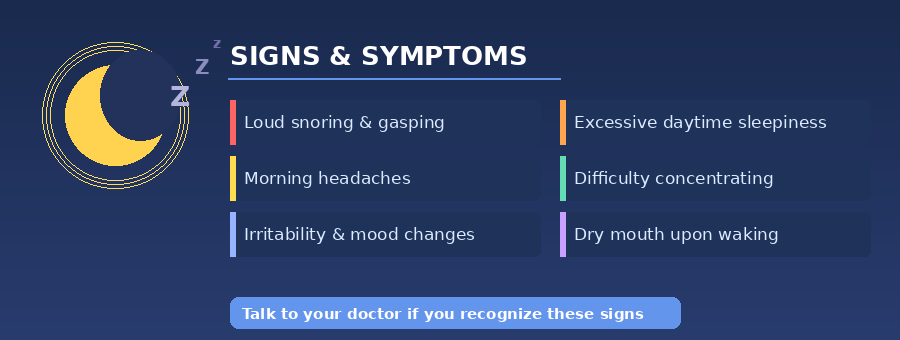
Many people with sleep apnea don’t know they have it. A bed partner often notices the signs first. Watch for these key symptoms:
- Loud, chronic snoring — especially snoring with pauses or gasping sounds
- Waking up choking or gasping — for air during the night
- Excessive daytime sleepiness — feeling drowsy at work or while driving
- Morning headaches — caused by low oxygen levels overnight
- Difficulty concentrating — or memory problems during the day
- Irritability or mood changes — linked to poor sleep quality
- Frequent nighttime urination — known as nocturia
- Dry mouth or sore throat — upon waking
When to See a Doctor
You should talk to your doctor if you snore loudly or feel exhausted after a full night’s sleep. A sleep specialist can order a sleep study — called a polysomnography — to confirm a diagnosis. Home sleep apnea tests are now widely available and affordable. If you’re also struggling with falling or staying asleep, read our guide on Understanding Insomnia Treatment: Causes, Symptoms, and Effective Treatments.
Health Risks of Untreated Sleep Apnea
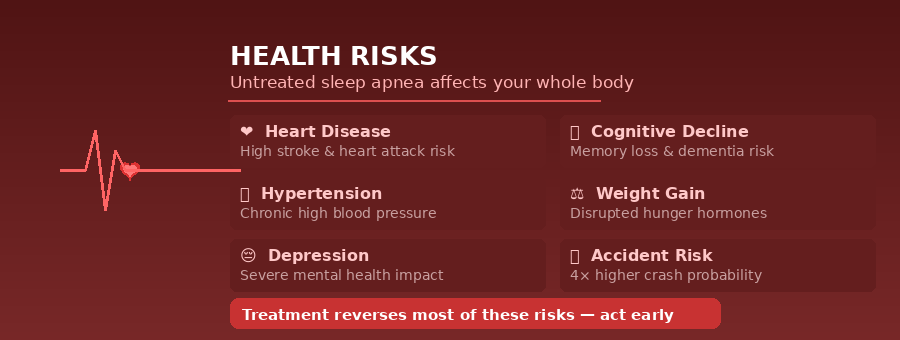
Leaving sleep apnea untreated creates serious long-term health consequences. Every apnea event drops your blood oxygen level, putting significant strain on your cardiovascular system and brain.
Here are the major health risks linked to untreated sleep apnea:
- High blood pressure (hypertension) — Repeated oxygen drops trigger your body’s stress response, raising blood pressure.
- Heart disease — Studies show a strong connection between OSA and heart attack, arrhythmia, and heart failure.
- Stroke — People with untreated sleep apnea face a two to four times higher stroke risk.
- Type 2 diabetes — Sleep apnea disrupts insulin regulation and glucose metabolism.
- Weight gain — Poor sleep increases hunger hormones like ghrelin, making weight management harder.
- Depression and anxiety — Chronic sleep deprivation significantly worsens mental health outcomes. Learn more in our article on The Impact of Stress on Sleep and How to Manage It.
- Cognitive decline — Long-term untreated OSA may increase the risk of dementia and memory loss.
- Increased accident risk — Daytime sleepiness raises your risk of car accidents and workplace injuries.
The good news? Effective sleep apnea solutions exist — and treating the condition reverses many of these risks.
Modern Sleep Apnea Solutions
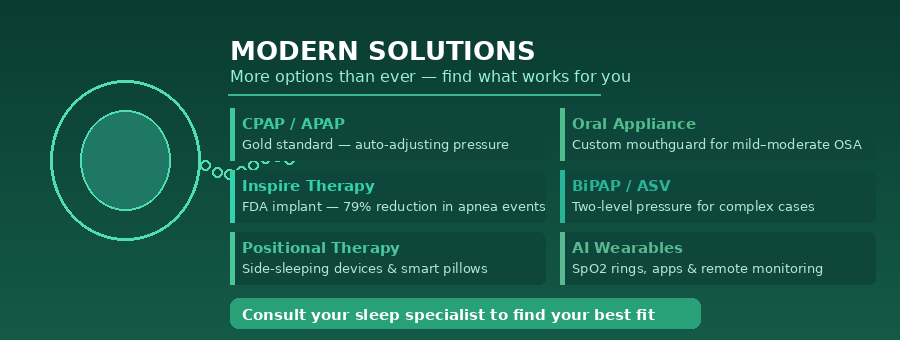
Treatment options have expanded dramatically in recent years. Patients now have access to more comfortable, personalized, and tech-forward solutions than ever before.
1. CPAP Therapy — The Gold Standard
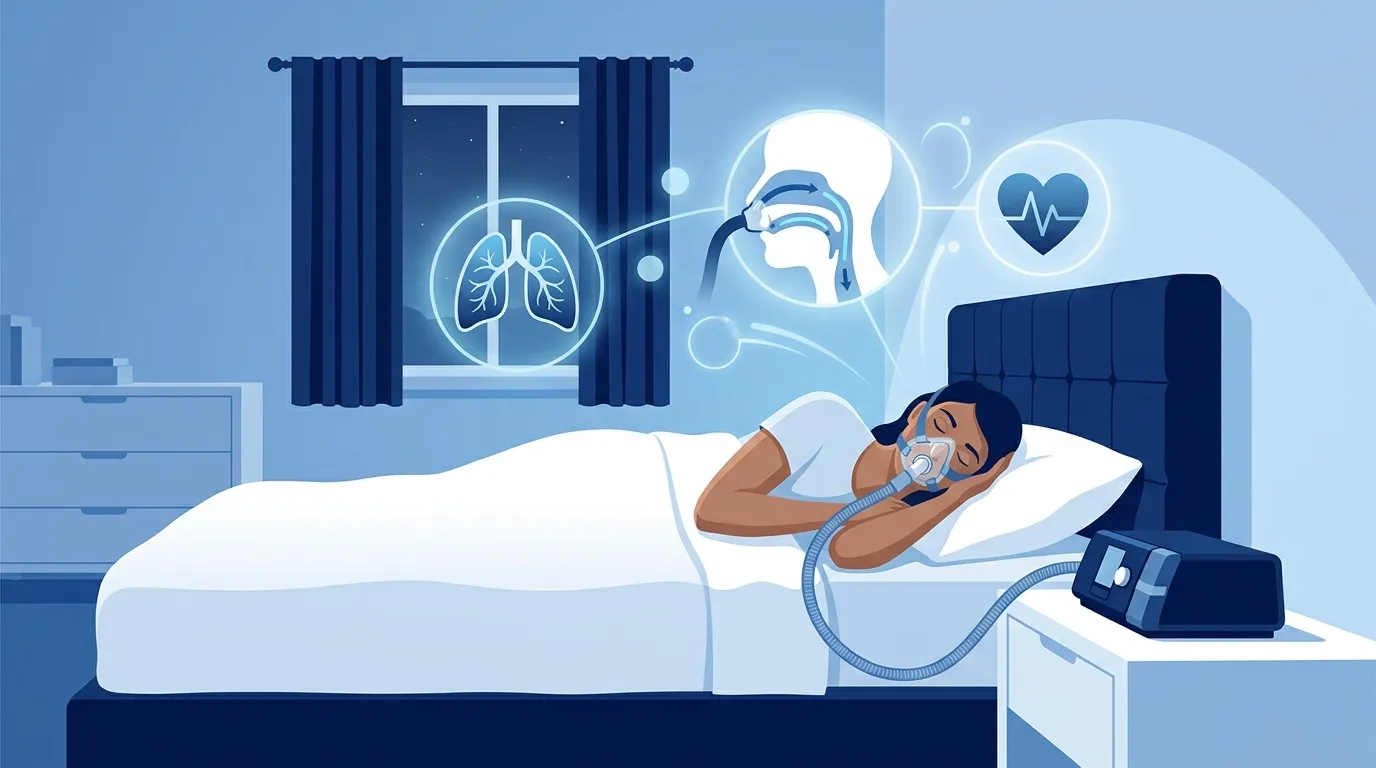
Continuous Positive Airway Pressure (CPAP) therapy remains the most effective treatment for moderate to severe OSA. A CPAP machine delivers a steady stream of pressurized air through a mask, keeping your airway open throughout the night.
Modern CPAP devices offer:
- Auto-adjusting pressure (APAP) — The machine automatically adjusts pressure based on your breathing patterns.
- Heated humidifiers — These reduce dry mouth and nasal irritation.
- Smaller, quieter machines — Today’s devices are far less bulky and disruptive than older models.
- Integrated apps — Many CPAP machines sync with smartphone apps to track sleep data, AHI scores, and mask leaks in real time.
2. BiPAP and ASV Therapy
For patients who struggle with CPAP or have central sleep apnea, BiPAP (Bilevel Positive Airway Pressure) and ASV (Adaptive Servo-Ventilation) machines offer alternatives. These devices use two pressure levels — one for inhalation and one for exhalation — making breathing feel more natural.
3. Oral Appliance Therapy
Oral appliances look similar to athletic mouthguards. They gently reposition your jaw and tongue to keep the airway open. These devices are ideal for mild to moderate OSA, especially for people who cannot tolerate CPAP. A dentist or sleep specialist custom-fits the device for maximum comfort and effectiveness. For those also exploring natural approaches, see our guide on Herbal Sleep Remedies That Help You Sleep Naturally.
4. Inspire Therapy — Upper Airway Stimulation
Inspire therapy is an FDA-approved implanted device for people with moderate to severe OSA who cannot use CPAP. A small sensor monitors your breathing during sleep, then sends mild electrical impulses to the hypoglossal nerve to gently move your tongue forward. Clinical trials show Inspire reduces apnea events by over 79% in eligible patients.
5. Surgical Options
Surgery may help patients with specific anatomical causes of sleep apnea. Common procedures include:
- Uvulopalatopharyngoplasty (UPPP): Removes excess tissue from the throat
- Maxillomandibular advancement (MMA): Moves the jaw forward to enlarge the airway
- Hypoglossal nerve stimulation surgery: A minimally invasive implant option
6. Positional Therapy
Some people experience sleep apnea mainly when sleeping on their back. Positional therapy devices — including specialized pillows or wearable vibration alerts — encourage side sleeping. For positional OSA, this simple change can cut apnea events significantly.
7. Emerging Technologies
Sleep medicine continues to advance rapidly. Exciting newer sleep apnea solutions include:
- Wearable biosensors that detect apnea events and track trends over time
- AI-powered CPAP analysis tools that predict pressure needs before symptoms worsen
- Telemedicine sleep clinics making diagnosis and follow-up more accessible nationwide
- Ring and watch-based sleep trackers with built-in SpO2 sensors for early detection
Lifestyle Changes That Support Sleep Apnea Treatment
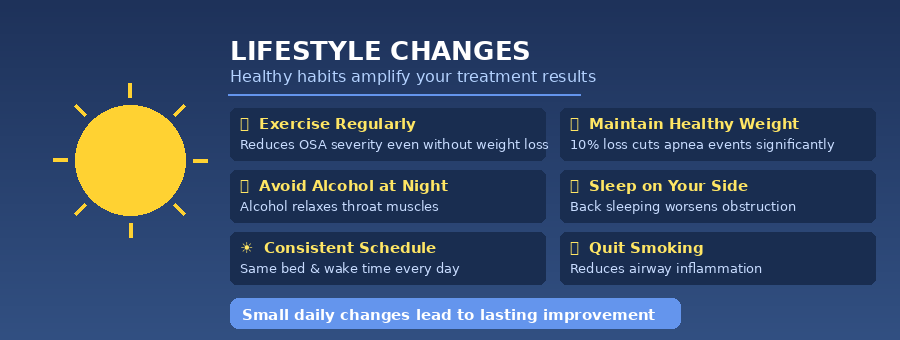
Medical treatment works best alongside healthy lifestyle habits. These evidence-based changes can reduce apnea severity and improve sleep quality:
- Lose weight if needed: Even a 10% weight reduction can significantly decrease apnea events in overweight individuals.
- Avoid alcohol before bed: Alcohol relaxes throat muscles and worsens airway collapse.
- Quit smoking: Smoking causes airway inflammation and increases apnea risk.
- Sleep on your side: Back sleeping worsens airway obstruction in most OSA patients.
- Maintain a consistent sleep schedule: Going to bed and waking at the same time each day supports deeper, more restorative sleep.
- Exercise regularly: Aerobic exercise improves sleep quality and reduces OSA severity — even without significant weight loss. For more proven techniques, explore our article 10 Science-Backed Ways to Fall Asleep Fast and Stay Asleep.
- Elevate the head of your bed: Raising the head by 4 to 6 inches can reduce symptoms for some patients.
- Treat nasal congestion: Allergies and nasal blockages worsen airway obstruction. Talk to your doctor about nasal sprays or allergy treatment.
Conclusion
Sleep apnea is more than just loud snoring. It is a serious medical condition with real consequences for your heart, brain, and quality of life. The encouraging news is that today’s sleep apnea solutions are more effective and accessible than ever. From advanced CPAP machines and implantable devices to oral appliances and lifestyle changes, you have many options. The right path forward starts with a proper diagnosis. Talk to your doctor, get tested, and take your sleep health seriously. For trusted clinical guidance, visit the Mayo Clinic’s sleep apnea overview or the NIH National Heart, Lung, and Blood Institute. A good night’s rest can genuinely transform your life.
Related Articles
Deepen your sleep health knowledge with these articles from our library:
- The Impact of Stress on Sleep and How to Manage It — How chronic stress disrupts sleep and practical tools to restore it
- Herbal Sleep Remedies That Help You Sleep Naturally — Natural herbs and supplements that support restful, deep sleep
- 10 Science-Backed Ways to Fall Asleep Fast and Stay Asleep — Research-proven strategies to improve sleep onset and quality
- Understanding Insomnia Treatment: Causes, Symptoms, and Effective Treatments — A complete guide to diagnosing and treating chronic insomnia
External references: AASM Sleep Apnea Fact Sheet • Mayo Clinic — Sleep Apnea • NIH — National Heart, Lung, and Blood Institute
Frequently Asked Questions
Q: Can sleep apnea go away on its own?
Sleep apnea rarely resolves without treatment. In some cases, significant weight loss or resolving nasal obstruction may reduce symptoms. However, most people need a formal treatment plan. Leaving it untreated increases health risks over time.
Q: Is sleep apnea hereditary?
Yes, genetics play a role. You face a higher risk if a close family member has sleep apnea. Inherited traits like jaw structure, neck circumference, and body weight distribution all affect airway anatomy and apnea risk.
Q: What is the newest treatment for sleep apnea?
Upper airway stimulation (Inspire therapy) has expanded significantly as a leading sleep apnea solution for CPAP-intolerant patients. AI-powered CPAP devices and remote sleep monitoring through wearables also represent some of the most significant recent advances in sleep medicine.