

Sleep Calculator: Find Your Ideal Bedtime and Wake-Up Time
Getting enough sleep can feel difficult when your bedtime changes every night. A sleep calculator can help you create a more consistent schedule based on your desired wake-up time.
Sleep timing matters because your body follows a natural circadian rhythm. Your daily habits, light exposure, stress levels, and sleep environment also affect how well you rest.
A sleep calculator should not replace healthy sleep habits. Instead, use it as a planning tool alongside a consistent routine.
This guide from Sleep Ease Guide explains how sleep timing works, how to use a sleep calculator, and which relaxation strategies may help you prepare for bedtime.
What Is a Sleep Calculator?

A sleep calculator estimates suitable bedtimes based on the time you need to wake up.
Many calculators consider sleep cycles. Sleep cycles contain different stages, including lighter sleep, deeper sleep, and REM sleep. These stages repeat several times during the night.
However, sleep cycles do not follow an exact schedule for everyone.
A calculator therefore provides an estimate rather than a medical prescription.
For example, if you need to wake at 7:00 a.m., you might test several bedtime options that provide enough time for sleep. You can then adjust your schedule based on how rested you feel.
Why Use a Sleep Calculator?
A sleep calculator can help you:
- Plan a consistent bedtime.
- Estimate how much time you should spend in bed.
- Build a predictable evening routine.
- Avoid extremely late bedtimes.
- Coordinate sleep with school or work schedules.
- Identify patterns that affect morning energy.
The most important goal remains adequate, regular sleep.
How Much Sleep Do Adults Need?
Sleep needs vary by age and individual circumstances.
Most adults need around seven to nine hours of sleep each night. Some people naturally need slightly more or less.
| Age group | Typical recommended sleep |
|---|---|
| Teenagers | 8–10 hours |
| Young adults | 7–9 hours |
| Adults | 7–9 hours |
| Older adults | 7–8 hours |
Instead of focusing only on sleep cycles, consider your total sleep opportunity.
If you regularly feel tired despite spending enough time in bed, other factors may affect your sleep.
These factors can include stress, inconsistent schedules, excessive evening light, caffeine, an uncomfortable bedroom, or an underlying sleep disorder.
How to Use a Sleep Calculator
Using a sleep calculator is simple.
Start with your required wake-up time. Then work backward to identify possible bedtimes that allow enough time for sleep.
Step 1: Choose Your Wake-Up Time
Pick a realistic wake-up time that you can maintain most days.
For example, you might need to wake at 6:30 a.m. for work.
Step 2: Allow Enough Time for Sleep
Plan approximately seven to nine hours for most adults.
Remember that time in bed does not always equal time asleep.
If you usually need 15 to 30 minutes to fall asleep, consider that when planning your bedtime.
Step 3: Keep Your Schedule Consistent
Try to keep your bedtime and wake-up time relatively stable.
A consistent schedule helps your body recognize when to prepare for sleep and wakefulness.
Step 4: Adjust Based on Your Experience
A sleep calculator gives you a starting point.
Track your sleep for several days. Notice your energy, concentration, mood, and morning alertness.
Then adjust your bedtime gradually if necessary.
Sleep Calculator Example
Suppose you need to wake at 7:00 a.m.
You could create a schedule that provides approximately eight hours of sleep.
| Wake-up time | Approximate bedtime | Sleep opportunity |
|---|---|---|
| 6:00 a.m. | 10:00 p.m. | 8 hours |
| 6:30 a.m. | 10:30 p.m. | 8 hours |
| 7:00 a.m. | 11:00 p.m. | 8 hours |
| 7:30 a.m. | 11:30 p.m. | 8 hours |
| 8:00 a.m. | 12:00 a.m. | 8 hours |
These times provide a simple planning framework.
Your ideal bedtime may differ because sleep needs and sleep onset vary between individuals.
Sleep Cycles and the Sleep Calculator
Sleep cycles receive a lot of attention in online sleep calculators.
A typical sleep period includes multiple cycles. Each cycle moves through different sleep stages.
However, the length of each cycle can vary.
That means you should not treat a sleep calculator’s cycle estimate as an exact biological timer.
Getting enough total sleep usually matters more than trying to wake at a mathematically perfect point in a cycle.
A regular schedule also supports healthy sleep habits.
Anxiety Can Make Bedtime Difficult
Stress and anxiety can make it harder to transition into sleep.
You may notice racing thoughts, muscle tension, repeated worrying, or difficulty relaxing.
A sleep calculator can help organize your schedule, but it cannot directly reduce anxiety.
That requires a calming bedtime routine.
Try the 4-Step Breathing Exercise
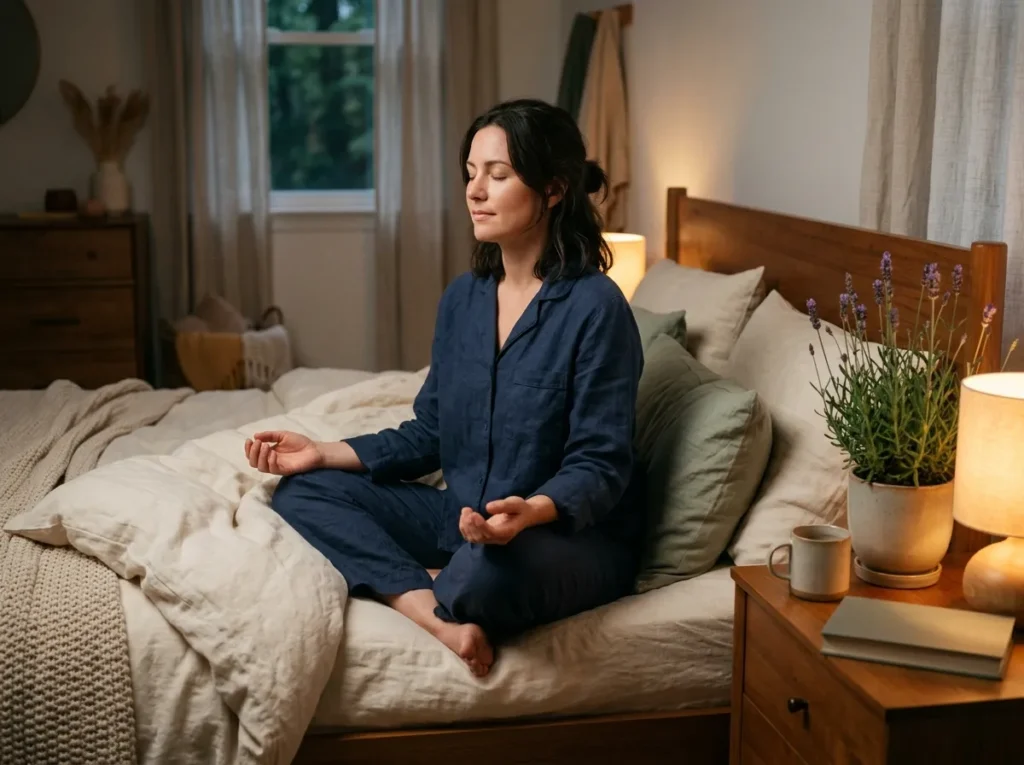
Sit or lie comfortably.
- Relax your shoulders.
- Breathe slowly and comfortably.
- Notice the movement of your abdomen.
- Continue for several minutes without forcing your breathing.
The goal is not to breathe perfectly.
Instead, focus your attention on slow, comfortable breathing and let distracting thoughts pass.
Progressive Muscle Relaxation
Progressive muscle relaxation can help you notice physical tension.
Start with your feet and gradually move upward.
Gently tense one muscle group for a few seconds. Then relax it.
Move through your legs, abdomen, hands, shoulders, and face.
Keep the exercise comfortable. Stop if any movement causes pain.
The Worry List
If your mind becomes busy at bedtime, write down your concerns earlier in the evening.
Create two columns:
| Concern | Next small action |
|---|---|
| Work tomorrow | Prepare clothes tonight |
| Important appointment | Add it to calendar |
| Unfinished task | Schedule it for tomorrow |
| General worry | Discuss it during daytime |
This approach can create psychological distance from unfinished tasks.
Natural Sleep Support: Chamomile, Valerian Root, Lavender, and Passionflower
Some people explore herbs as part of a relaxing nighttime routine.
Common examples include chamomile, valerian root, lavender, and passionflower.
Chamomile
Chamomile commonly appears in evening teas.
Many people associate its mild herbal flavor with relaxation.
Evidence for sleep benefits remains mixed, so avoid treating chamomile as a guaranteed sleep treatment.
Valerian Root
Valerian root has a long history of traditional use for relaxation and sleep.
Research has produced mixed results.
It can also interact with medications, so talk with a healthcare professional before using valerian supplements.
Lavender
Lavender is commonly used through its scent.
Some people find lavender aroma relaxing before bedtime.
You can incorporate a gentle lavender scent into your evening environment if you tolerate it well.
Passionflower
Passionflower appears in some traditional herbal preparations designed for relaxation.
Research on sleep remains limited and mixed.
Speak with a healthcare professional before using concentrated herbal products, especially if you take medications.
Create a Daily Routine That Supports Better Sleep
Your nighttime routine begins during the daytime.
Small habits can make your bedtime routine easier.
| Time | Helpful habit |
|---|---|
| Morning | Wake at a consistent time |
| Morning | Get natural outdoor light |
| Daytime | Stay physically active |
| Afternoon | Limit late caffeine |
| Evening | Reduce stimulating activities |
| 1 hour before bed | Dim lights and relax |
| Bedtime | Follow your planned sleep schedule |
Consistency matters more than perfection.
You do not need to change everything at once.
Choose one or two habits and practice them regularly.
A Simple Evening Routine for Anxiety
Try this 60-minute routine before bed.
60 Minutes Before Bed
Finish demanding tasks and begin lowering household stimulation.
Dim bright lights when practical.
45 Minutes Before Bed
Take a warm shower or complete another calming personal-care activity.
Avoid stressful discussions when possible.
30 Minutes Before Bed
Prepare your clothes and essentials for tomorrow.
Write down unfinished tasks so you do not need to remember them overnight.
20 Minutes Before Bed
Read something relaxing or listen to quiet audio.
Avoid content that makes you feel alert or emotionally stimulated.
10 Minutes Before Bed
Practice slow breathing or progressive muscle relaxation.
Bedtime
Follow the bedtime suggested by your sleep calculator.
Keep your bedroom quiet, comfortable, and dark.
Improve Your Sleep Environment
Your bedroom can influence how easily you fall asleep.
Consider these practical changes:
- Keep the room comfortably cool.
- Reduce unnecessary noise.
- Use curtains or shades to control unwanted light.
- Keep phones away from your immediate sleeping area when possible.
- Choose comfortable bedding.
- Reserve your bed mainly for sleep.
If you enjoy technology designed for sleep routines, you can explore Hatch through this affiliate link. Sleep Ease Guide may receive compensation from qualifying purchases.
What If You Cannot Fall Asleep?
Do not turn bedtime into a competition.
Watching the clock repeatedly can increase frustration.
If you remain awake and feel increasingly alert, consider getting out of bed briefly.
Choose a quiet, relaxing activity in low light. Return to bed when you feel sleepy.
Avoid turning this period into work, social media, or stimulating entertainment.
If sleep problems happen frequently or interfere with daytime functioning, speak with a healthcare professional.
When a Sleep Calculator Is Not Enough
A sleep calculator works best as a scheduling tool.
Persistent sleep problems may require a deeper evaluation.
Consider discussing your sleep with a healthcare professional if you regularly experience:
- Persistent difficulty falling asleep.
- Frequent nighttime awakenings.
- Significant daytime sleepiness.
- Loud snoring or breathing interruptions.
- Persistent morning headaches.
- Sleep problems that affect school, work, or daily activities.
A healthcare professional can help identify potential causes and appropriate next steps.
Sleep Ease Guide: Build a Complete Sleep Strategy
A sleep calculator is only one part of a healthy sleep strategy.
Your routine should also include consistent wake times, daytime light exposure, regular activity, relaxation, and a comfortable sleep environment.
For more guidance, Sleep Ease Guide readers can explore related articles such as:
- Sleep Hygiene Tips: Link to
/sleep-hygiene/the-10-sleep-hygiene-tips/ - The Impact of Stress on Sleep: Link to
/lifestyle-health/the-impact-of-stress-on-sleep/ - Natural Herbal Remedies for Sleep: Link to your relevant
/natural-remedies/article. - Sleep Apnea: Link to
/sleep-disorders/sleep-apnea/
These internal links can help readers move from sleep scheduling to broader sleep-health strategies.
Frequently Asked Questions
Is a sleep calculator accurate?
A sleep calculator provides an estimate rather than an exact biological prediction. Sleep cycles vary between individuals. Use the result as a scheduling guide.
What time should I go to bed?
Choose a bedtime that gives you enough opportunity for sleep before your required wake-up time. Most adults need about seven to nine hours.
Can herbs help with sleep?
Chamomile, valerian root, lavender, and passionflower are commonly associated with relaxation. Research varies, and supplements can have risks or interactions. Consult a healthcare professional before using concentrated herbal products.
Conclusion
A sleep calculator can make sleep planning easier.
It helps you work backward from your required wake-up time and create a consistent bedtime.
However, healthy sleep involves more than calculating hours or cycles.
Your daily routine, stress levels, light exposure, sleep environment, and relaxation habits all matter.
Try combining a sleep calculator with calming breathing exercises, progressive muscle relaxation, and consistent sleep and wake times.
If anxiety or persistent sleep problems continue, consider speaking with a healthcare professional.
Small, consistent changes can create a more predictable path toward restful nights.