
How Exercise and Sleep Quality Are Connected: A Complete Guide
How Exercise Improves Sleep Quality: A Complete Guide
Getting better sleep does not always require complicated changes. Sometimes, simple daily movement can make a meaningful difference.
The connection between exercise and sleep quality has attracted considerable attention because physical activity can support several systems involved in healthy sleep.
Regular exercise may help you fall asleep more easily, maintain a consistent sleep schedule, and feel more rested during the day. It can also provide a healthy way to manage everyday stress.
You do not need an intense workout program to support better sleep. Walking, stretching, yoga, cycling, swimming, and moderate strength training can all fit into a sleep-friendly lifestyle.
At Sleep Ease Guide, we believe healthy sleep starts with practical habits you can maintain. Exercise and sleep quality can become one important part of that approach.
How Exercise and Sleep Quality Are Connected
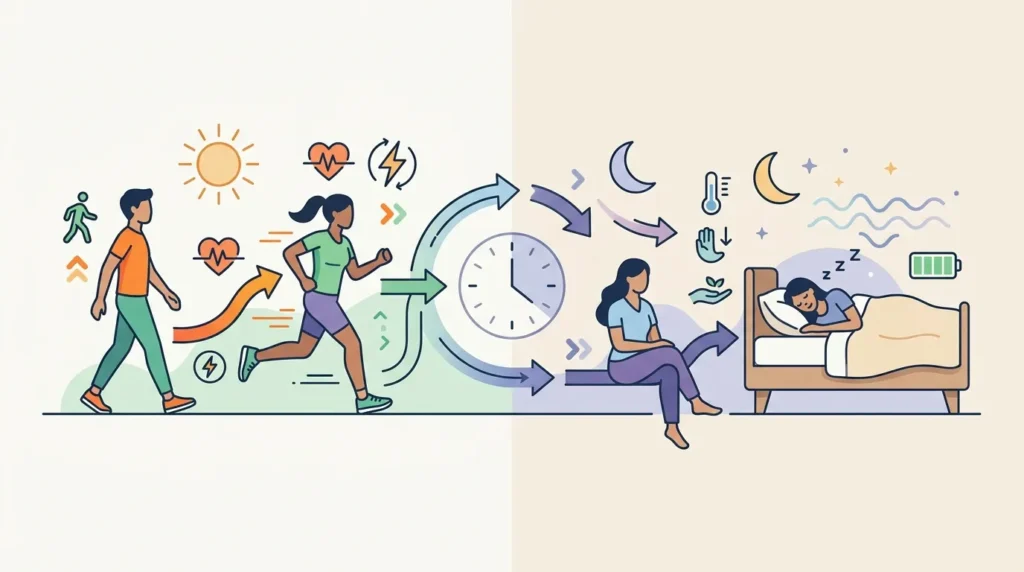
The relationship between exercise and sleep quality involves several factors.
Physical activity can help regulate your body’s internal clock. It may also reduce everyday tension and support a healthier sleep-wake cycle.
Regular movement can also help you feel naturally tired at night. This may make the transition from wakefulness to sleep easier.
However, exercise and sleep quality represents only one part of healthy sleep. Your caffeine intake, evening routine, bedroom environment, stress levels, and sleep schedule also matter.
Regular physical activity can also support better sleep and reduce feelings of anxiety, according to the CDC.
Exercise Can Support Your Circadian Rhythm
Your circadian rhythm helps control when you feel awake and when you feel sleepy.
Your body responds to environmental signals throughout the day. Daylight, activity, meals, and regular sleep times can all provide useful signals.
Morning exercise can combine two helpful habits: physical activity and exposure to natural daylight.
A morning walk can therefore become a simple addition to your routine.
Exercise May Help Reduce Stress
Stress often makes it difficult to relax at night. Learn more about how stress affects sleep and discover practical ways to manage nighttime tension.
Physical activity provides a healthy outlet for physical and mental tension. It may also support emotional well-being.
After exercising, many people experience a sense of physical relaxation. That feeling can make your evening wind-down easier.
If anxiety keeps your thoughts active at bedtime, combine daytime exercise with calming nighttime habits.
What Types of Exercise Support Better Sleep?
You do not need to choose one perfect workout.
The best activity is usually something you enjoy and can perform consistently.
Walking
Walking offers one of the simplest ways to increase daily movement.
A brisk walk can provide moderate physical activity without requiring specialized equipment.
Try taking a 20-to-30-minute walk during the day.
You can walk outdoors, around your neighborhood, or indoors when weather conditions make outdoor activity difficult.
Strength Training
Strength training can support overall fitness while adding healthy physical activity to your routine.
Bodyweight exercises, resistance bands, and appropriate weights can all work.
Focus on proper technique and gradual progress.
You do not need to exhaust yourself to support the connection between exercise and sleep quality.
Yoga and Gentle Stretching
Yoga combines movement, breathing, and relaxation.
Gentle stretching can also help release physical tension after a busy day.
An evening stretching routine may create a useful transition between daytime activity and bedtime.
Keep movements comfortable and avoid forcing your body into uncomfortable positions.
Aerobic Exercise
Walking, cycling, swimming, dancing, and jogging can provide aerobic activity.
Regular aerobic exercise can support cardiovascular health and may contribute to healthier sleep patterns.
Choose an activity that fits naturally into your lifestyle.
Consistency matters more than choosing the most demanding workout.
Does Exercise Before Bed Improve Sleep?
The answer depends on the individual and the type of exercise.
Some people can exercise in the evening without experiencing sleep problems. Others feel more alert after vigorous exercise.
If intense workouts make you feel energized, finish them earlier in the day.
You can reserve the evening for gentle walking, stretching, yoga, or relaxation exercises.
Pay attention to how your body responds.
The goal involves finding a routine that supports both exercise and sleep quality without disrupting your natural wind-down process.
How Exercise May Support Deeper Sleep
Sleep includes several stages that serve different functions.
Deep sleep plays an important role in physical restoration. REM sleep also supports processes related to learning, memory, and emotional health.
Regular physical activity may support healthier sleep patterns and reduce nighttime restlessness for some people.
However, exercise cannot guarantee perfect sleep.
Stress, caffeine, inconsistent bedtimes, medications, illness, and other factors can still affect your sleep.
Think of exercise as one piece of your overall sleep strategy.
Relaxation Exercises for Better Sleep
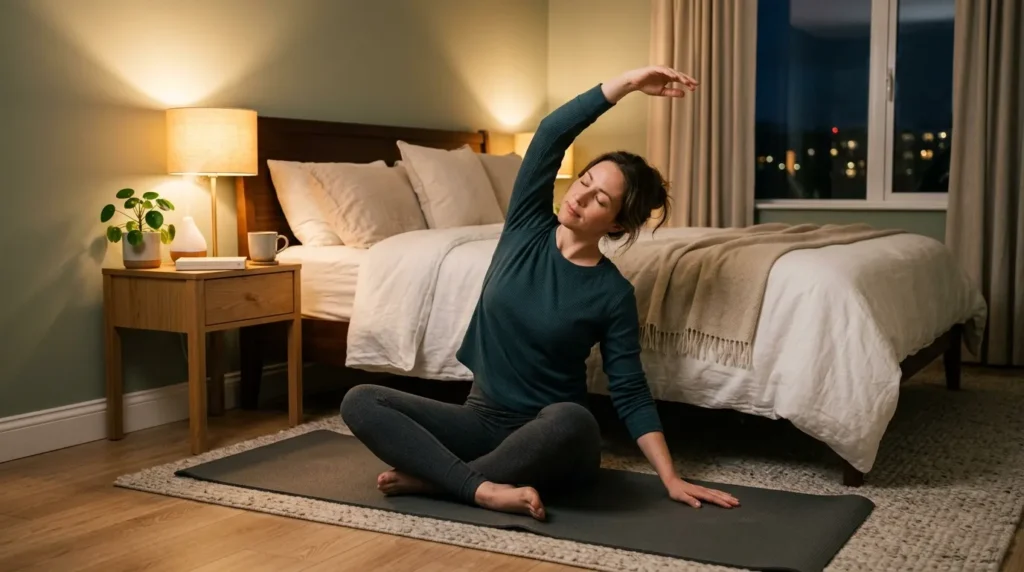
Exercise and sleep quality does not always mean vigorous movement.
Relaxation exercises can help prepare your body and mind for bedtime. For more practical strategies, explore our guide to falling asleep faster.
They can become especially useful when anxiety makes it difficult to settle down.
Slow Breathing
Find a comfortable position and breathe slowly.
Allow your breathing to remain gentle and natural.
Focus your attention on the movement of your abdomen as you breathe.
Continue for several minutes without forcing your breath.
If you feel dizzy or uncomfortable, stop and return to normal breathing.
Progressive Muscle Relaxation
Progressive muscle relaxation involves gently tensing and releasing different muscle groups.
Start with your feet and gradually move toward your shoulders and face.
Keep each contraction gentle.
Notice how your body feels before and after releasing the tension.
This practice can help you recognize physical tension before bedtime.
Gentle Evening Stretching
Spend five to ten minutes performing comfortable stretches.
Try gentle shoulder rolls, neck movements, seated stretches, and relaxed leg stretches.
Move slowly and breathe comfortably.
The purpose is relaxation rather than improving flexibility.
Daily Routines That Can Reduce Evening Anxiety
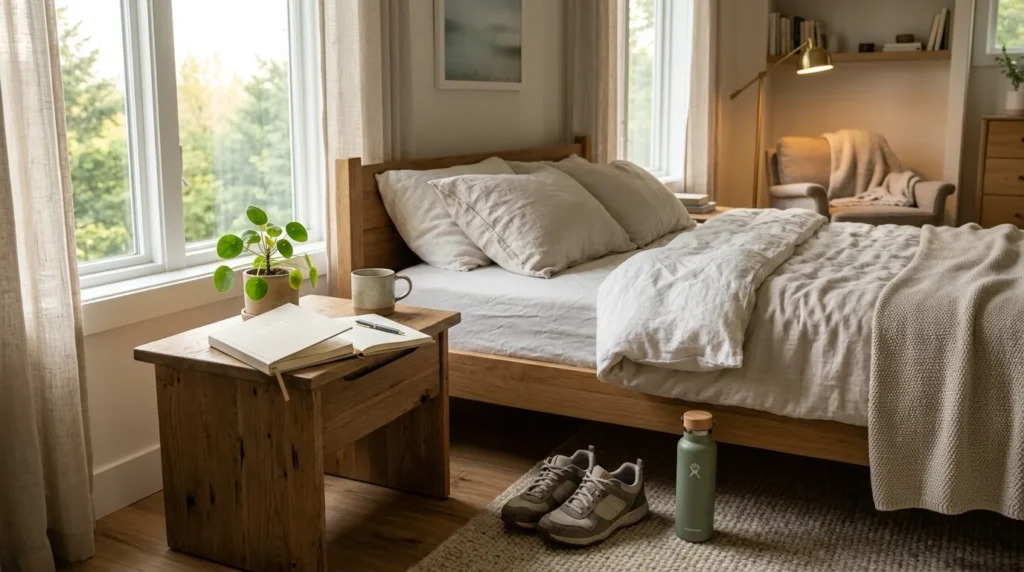
A predictable evening routine can help your mind transition from daytime activity toward sleep.
Building these habits into a consistent routine is an important part of good sleep hygiene.
Small habits often work better than complicated routines.
The NHLBI recommends consistent sleep and wake times, daily physical activity, and relaxation techniques as part of healthy sleep habits.
Keep a Consistent Sleep Schedule
Try going to bed and waking up at similar times each day.
A consistent schedule can support your body’s internal clock.
Keep weekend changes reasonably small when possible.
Exercise During the Day
Choose a realistic time for your main workout.
Morning and afternoon exercise can work particularly well for people who become energized after exercise.
A daily walk can also provide a practical starting point.
Create a Wind-Down Period
Give yourself time to slow down before bed.
Reduce stimulating activities as bedtime approaches.
Reading, gentle stretching, journaling, or calm music can become part of your wind-down routine.
Write Down Tomorrow’s Tasks
Unfinished tasks can keep your mind active at night.
Before bed, write down important things you need to remember tomorrow.
Then allow yourself to stop planning for the evening.
This simple habit can create mental space for relaxation.
Chamomile, Valerian Root, Lavender, and Passionflower
Some people include herbs or calming scents in their nighttime routines.
You can learn more about these approaches in our guide to herbal sleep remedies.

Chamomile
Chamomile tea is a popular caffeine-free evening beverage.
Many people enjoy its mild flavor as part of a relaxing bedtime ritual.
Valerian Root
Valerian root appears in several herbal products marketed for sleep and relaxation.
Research findings remain mixed, so you should not view valerian as a guaranteed sleep solution.
Lavender
Lavender is commonly used in aromatherapy.
Its scent can become part of a calming bedtime environment.
You might use a lavender-scented product as part of your wind-down routine.
Passionflower
Passionflower appears in some traditional herbal preparations for relaxation.
Evidence remains limited, and individual responses can vary.
If you take medications or have a medical condition, speak with a healthcare professional before using herbal supplements.
Natural products can still cause side effects or interact with medications.
How to Build a Sleep-Friendly Exercise Routine
A simple daily structure can make healthy habits easier to maintain.
Morning
Start your day at a consistent time.
Get some natural daylight when possible.
Take a short walk or perform gentle mobility exercises.
Afternoon
Complete your main exercise session.
Choose walking, cycling, swimming, yoga, strength training, or another activity you enjoy.
Evening
Begin slowing down several hours before bed.
If intense exercise keeps you alert, avoid scheduling it close to bedtime.
Choose gentle stretching or relaxed walking instead.
Before Bed
Keep your bedroom cool, dark, quiet, and comfortable.
Follow the same calming sequence each night.
You might read, stretch, practice slow breathing, or enjoy caffeine-free chamomile tea.
Over time, this routine can become a familiar signal that bedtime is approaching.
Common Exercise Mistakes That Can Affect Sleep
More exercise does not automatically mean better sleep.
Very demanding workouts can leave you feeling physically stressed or uncomfortable.
Suddenly increasing exercise volume can also make recovery harder.
Instead, increase your activity gradually.
Another common mistake involves exercising too close to bedtime.
If vigorous evening exercise consistently makes you feel alert, move it earlier.
Finally, do not use exercise as a substitute for sleep.
Your body needs both physical activity and adequate recovery.
How Long Does It Take to Notice Better Sleep?
Everyone responds differently.
Some people notice changes after establishing regular physical activity. Others may need several weeks of consistency.
Your sleep schedule, stress levels, exercise habits, and overall lifestyle can influence the results.
Avoid expecting one workout to transform your sleep.
Instead, focus on sustainable habits.
A 20-minute walk you repeat regularly may provide more value than an intense workout you cannot maintain.
If sleep problems continue despite healthy lifestyle changes, learn more about insomnia treatment options.
When Should You Seek Help for Sleep Problems?
Exercise and sleep quality can support healthier sleep, but persistent problems deserve professional attention.
Consider speaking with a healthcare professional if you regularly struggle to sleep despite improving your habits.
You should also seek medical guidance if sleep problems affect your daily functioning.
Loud snoring, breathing interruptions during sleep, and significant daytime sleepiness can also warrant professional evaluation.
Do not assume that poor sleep always results from insufficient exercise.
An underlying sleep disorder or another health issue may require appropriate treatment.
Persistent snoring, breathing interruptions, or excessive daytime sleepiness may require medical evaluation. Learn more about sleep apnea symptoms and treatment.
Conclusion
The connection between exercise and sleep quality provides a practical opportunity to improve your daily routine.
Regular movement can support your circadian rhythm, encourage relaxation, and promote healthier sleep patterns.
You do not need an extreme workout plan.
Walking, yoga, stretching, cycling, swimming, and moderate strength training can all support an active lifestyle.
Relaxation exercises can complement daytime movement. Consistent sleep and wake times can strengthen your overall routine.
Chamomile, valerian root, lavender, and passionflower may also fit into some nighttime routines. However, herbal products require appropriate caution.
The most effective approach combines regular movement, relaxation, healthy sleep habits, and consistency.
Start with one manageable change.
Take a daily walk. Create a calming evening routine. Keep your bedtime consistent.
Over time, these small habits can support better exercise and sleep quality and a healthier relationship with sleep.
Frequently Asked Questions
1. What exercise is best for improving sleep quality?
Walking, aerobic exercise, strength training, yoga, and stretching can all support healthy sleep. Choose activities you enjoy and can maintain regularly.
2. Should I exercise before going to bed?
Gentle exercise may help some people relax before bed. Intense workouts can make others feel more alert. Consider finishing vigorous exercise earlier.
3. Can exercise help with anxiety-related sleep problems?
Regular physical activity may help manage everyday stress and support relaxation. Combine exercise with slow breathing, stretching, and a consistent bedtime routine.